Niyodo Blue: the bluest river water
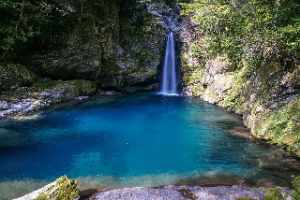
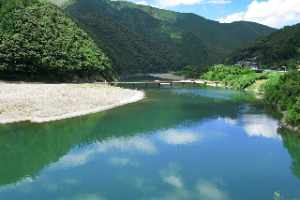
The Niyodo River is famous for water so clear it looks bright blue, known as Niyodo Blue. Nikobuchi pool in Ino Town is called the sacred spot of Niyodo Blue.
Shimanto River and its sinking bridges
The Shimanto River winds slowly through the mountains. Its low "sinking bridges" have no railings so that floodwater can pass over them. The Iwama sinking bridge in Shimanto City is one of the best known.
A street market since 1690
Kochi's Sunday Market dates back to 1690. About 300 stalls line roughly 1 km of Otesuji street, selling vegetables, fruit, knives and plants to about 17,000 people a day. It opens around 6:00 and closes around 14:00.
Country food: inaka-zushi
Inaka-zushi is sushi made without fish. Mountain vegetables such as myoga ginger, ryukyu (taro stems), konjac, bamboo shoots and shiitake sit on rice seasoned with yuzu or other citrus vinegar. It began when kelp and seaweed were hard to get in the mountains.
Quiet beaches and caves
Kotogahama in Geisei Village has about 4 km of white sand and pine trees. Ryugado Cave, one of Japan's three great limestone caves, has a walking course of about 1 km.
Information checked in September 2026. Times and prices can change, so please check the official sites before you go.